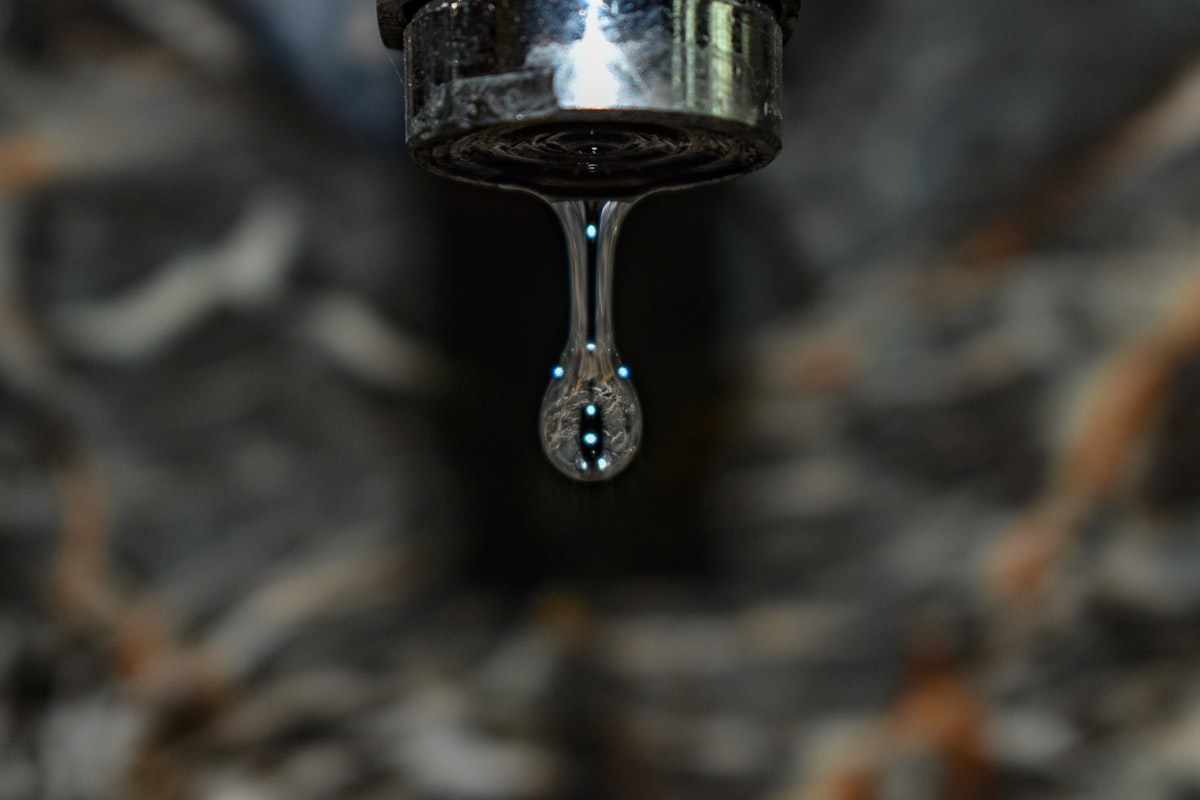
Drip. Drip. Drip. It's easy to tune out — just background noise in your home's daily rhythm. But that drip represents real money flowing down your drain, and over time, the cumulative cost of a leaky faucet can be surprisingly significant.
The math on a dripping faucet
A faucet that drips once per second wastes about 3,000 gallons of water per year. At average Illinois water rates, that's roughly $30 to $50 per year for a single dripping faucet. That might not sound enormous — until you consider that many homes have multiple dripping fixtures, and some leaks drip much faster than once per second.
A faucet dripping 10 times per minute — which is barely noticeable — wastes over 500 gallons per month. At that rate, a single leak costs $15 to $25 per month on your water bill. Two or three fixtures like that, and you're paying $50+ per month for water you're not using.
The EPA estimates that household leaks — faucets, toilets, and showerheads — waste nearly 1 trillion gallons of water annually in the United States. Nearly 10% of homes have leaks that waste 90 gallons or more per day.
It's not just the water bill
The financial cost of the wasted water is only part of the picture. Persistent drips cause mineral buildup and staining in sinks, tubs, and fixtures. They accelerate wear on the fixture itself. And when a dripping faucet is left unaddressed for months or years, what was a simple washer replacement can turn into a full faucet replacement — because the internal components have continued to degrade.
Why faucets drip
Most dripping faucets have one of a handful of causes:
- Worn rubber washers — The most common cause in traditional two-handle faucets. The washer seats against a valve seat, and over time it wears out.
- O-ring failure — Cartridge faucets use O-rings to create seals. These degrade with age and use.
- Worn cartridge — In single-handle and cartridge-style faucets, the cartridge itself can wear out.
- Ceramic disc issues — Modern disc faucets are durable but sediment can cause drips.
- Loose or failed packing nut — Dripping around the handle base indicates a packing issue.
DIY or call a plumber?
Replacing a washer in a standard two-handle faucet is a genuinely beginner-friendly DIY job. If you're comfortable with basic tools and willing to watch a tutorial, it's a reasonable weekend project. The part costs $1 to $5.
However, many faucet repairs require a bit more expertise. If you're dealing with a cartridge replacement, a ceramic disc faucet, or an older fixture where parts are hard to find, it can quickly become a frustrating project. And if you end up with a faucet that leaks worse, or a stripped shutoff valve that won't close, the repair costs go up.
A plumber can diagnose and repair most faucet leaks in under an hour. For that hour of work, you eliminate months or years of wasted water and the gradual damage that comes with it. It's usually money well spent — especially if the faucet is older or the leak has been going on for a while.
When to replace vs. repair
If your faucet is more than 15 to 20 years old, or if it's a builder-grade fixture that's been causing problems, replacement is often the better call. New faucets are more water-efficient, easier to maintain, and come with warranties. The cost of a quality replacement faucet and an hour of installation is often comparable to the cost of tracking down parts for an aging fixture.