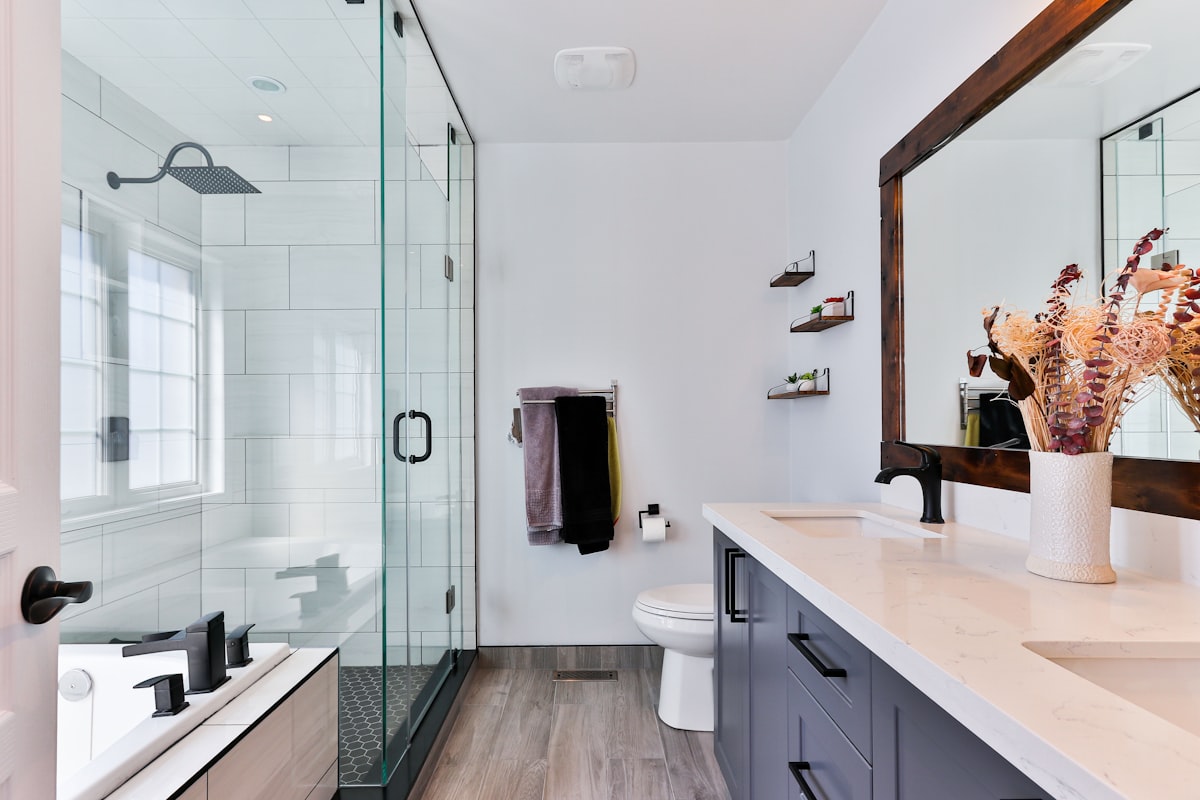
A bathroom remodel is one of the best investments you can make in your home. It improves daily quality of life, adds resale value, and transforms what is often the most-used room in the house. But plumbing is almost always involved — and it's the part of a bathroom remodel that most homeowners know the least about.
Here's what to expect when plumbing is part of your bathroom renovation, and how to prepare for a smooth project.
The plumbing scope of a bathroom remodel
Even a straightforward bathroom remodel — new vanity, new toilet, new shower fixtures — typically involves:
- Shutting off and disconnecting existing supply lines
- Replacing shutoff valves (if the existing ones are old or corroded)
- Installing new supply lines to the sink and toilet
- Connecting the drain to the new vanity or sink
- Rough-in adjustments if you're moving fixtures
- Shower valve and trim installation
If you're doing a more extensive remodel — moving walls, changing the layout, adding a freestanding tub, or upgrading to a spa shower — the plumbing scope grows significantly and should be planned from the beginning.
Rough-in vs. finish plumbing
Plumbing work in a remodel happens in two phases. Rough-in is the behind-the-wall work: running new supply lines, installing drain lines, blocking for fixtures, and making sure everything is in the right position before the walls close up. Finish plumbing happens after tile and drywall are complete: installing fixtures, connecting supply lines, setting the toilet, and making sure everything functions properly.
Rough-in dimensions matter enormously. The toilet flange, shower drain, and sink drain need to be precisely positioned before tile goes down. If you're working with a contractor and a plumber, make sure they're coordinating on rough-in specs before any tile is set.
Older homes present unique challenges
In older Fox Valley homes, a bathroom remodel sometimes reveals what's been hiding behind the walls for decades. Corroded pipes that were holding on, outdated venting that doesn't meet current code, or drain lines that have shifted. These discoveries can add to the scope of the project — but they're almost always better addressed during a remodel than ignored until they cause a problem.
Fixture selection and lead times
Your plumber needs to know what fixtures you're installing before they start work. Rough-in dimensions, valve types, and drain configurations vary by manufacturer and model. Selecting fixtures before the plumber begins — and ordering them in advance to avoid lead time delays — keeps the project on schedule.
This is especially important for specialty items like freestanding tubs, wall-mounted faucets, or rain shower systems, which often have longer lead times and specific rough-in requirements.
Timeline expectations
A typical bathroom remodel with plumbing work runs two to four weeks from demo to completion, depending on scope. The plumber is usually needed at two key points: rough-in (early in the project, before walls close) and finish (near the end, after tile is done). Coordinating these phases with your general contractor keeps everyone's schedule moving.
Working with a plumber who communicates clearly and shows up when they say they will is one of the most valuable things you can do to keep a bathroom remodel on track. We make it a point to coordinate directly with homeowners and contractors throughout the project.