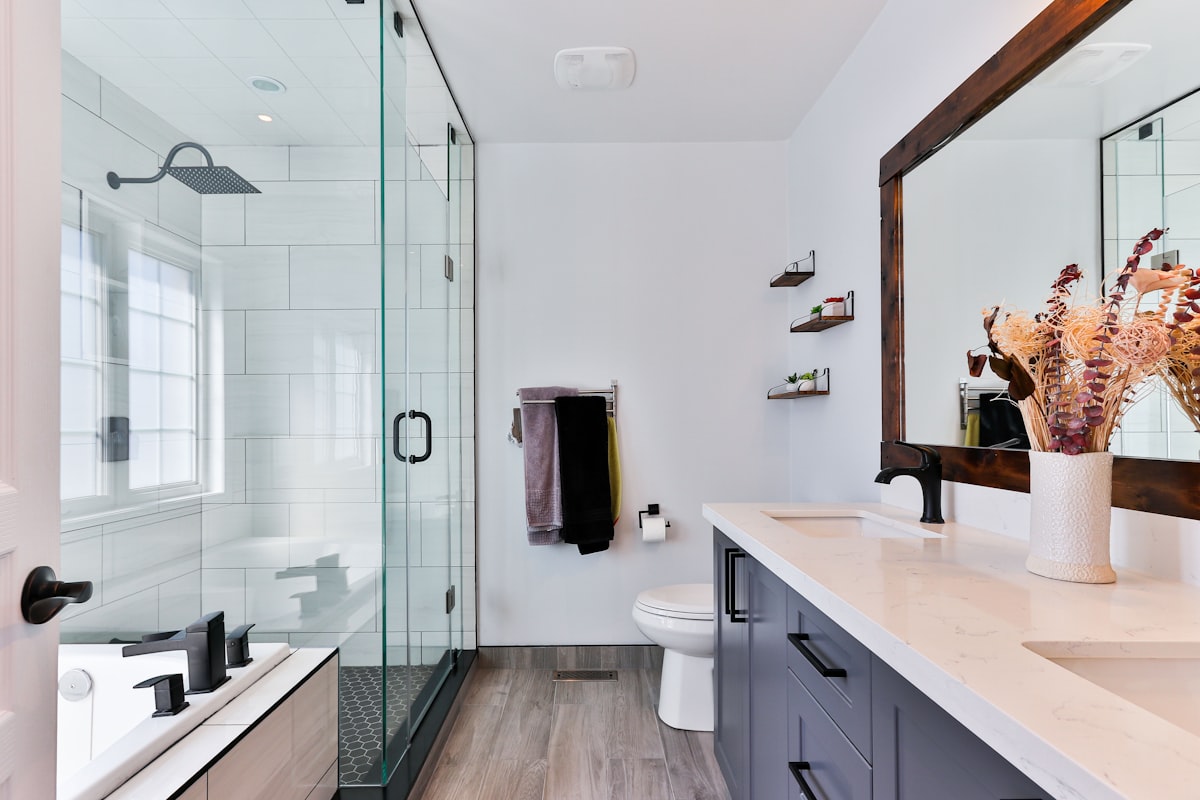
Few bathroom upgrades transform a space as completely as a freestanding tub. Where a traditional alcove tub is functional and unremarkable, a freestanding tub becomes a focal point — a piece of furniture for bathing that changes the entire character of the room.
They've become one of the most requested items we install at D&A Fox Valley Plumbing, and for good reason. Here's what makes them worth considering — and what you should know about the installation before you commit.
The appeal of a freestanding tub
The visual impact is the obvious starting point. A well-chosen freestanding tub anchors a bathroom in a way that nothing else does. Whether it's a classic clawfoot in cast iron, a modern oval in acrylic, or a Japanese soaking tub in a minimalist space, the tub becomes the reason the room exists.
Beyond aesthetics, freestanding tubs offer practical advantages. They're accessible from all sides, making them easier to clean than alcove tubs. Many designs are deeper than standard tubs, providing a more immersive soak. And because they're not built into the wall, they can be repositioned during a future remodel with less disruption.
What installation actually involves
Here's where homeowners sometimes get a surprise: freestanding tubs have specific plumbing requirements that differ from standard alcove tubs, and they need to be planned for — not figured out after the tub arrives.
- Floor drain location — The drain for a freestanding tub typically comes through the floor, not the wall. The drain needs to be positioned precisely before tile is set.
- Filler type — Freestanding tubs often use floor-mounted or deck-mounted fillers (faucets that rise up from the floor or tub deck) rather than wall-mounted faucets. These require supply lines to be rough-in in specific positions.
- Floor reinforcement — Cast iron freestanding tubs can weigh 300+ pounds when empty. The subfloor may need reinforcement.
- Overflow configuration — Not all freestanding tubs include an overflow; some require custom configurations.
The single most important piece of advice for a freestanding tub installation: choose the tub before your plumber does the rough-in. The specific tub model determines exactly where the drain and supply lines need to go. Getting this wrong means redoing work after tile is set — expensive and avoidable.
Material considerations
Freestanding tubs come in several materials, each with trade-offs:
- Acrylic — Lightweight, affordable, good heat retention, wide variety of shapes. Most popular for good reason.
- Cast iron — The classic choice. Extremely durable and retains heat exceptionally well, but very heavy and expensive.
- Copper — Stunning appearance, excellent heat retention, naturally antimicrobial. Primarily a luxury/boutique choice.
- Stone resin — Increasingly popular, provides the weight and heat retention of cast iron with more design flexibility.
Resale value
A well-designed bathroom with a quality freestanding tub can meaningfully improve a home's resale value and time on market. Buyers respond strongly to bathrooms that feel like a retreat rather than a utility room. Whether you're upgrading for yourself or with an eye toward resale, a freestanding tub is one of the remodel investments that tends to deliver.